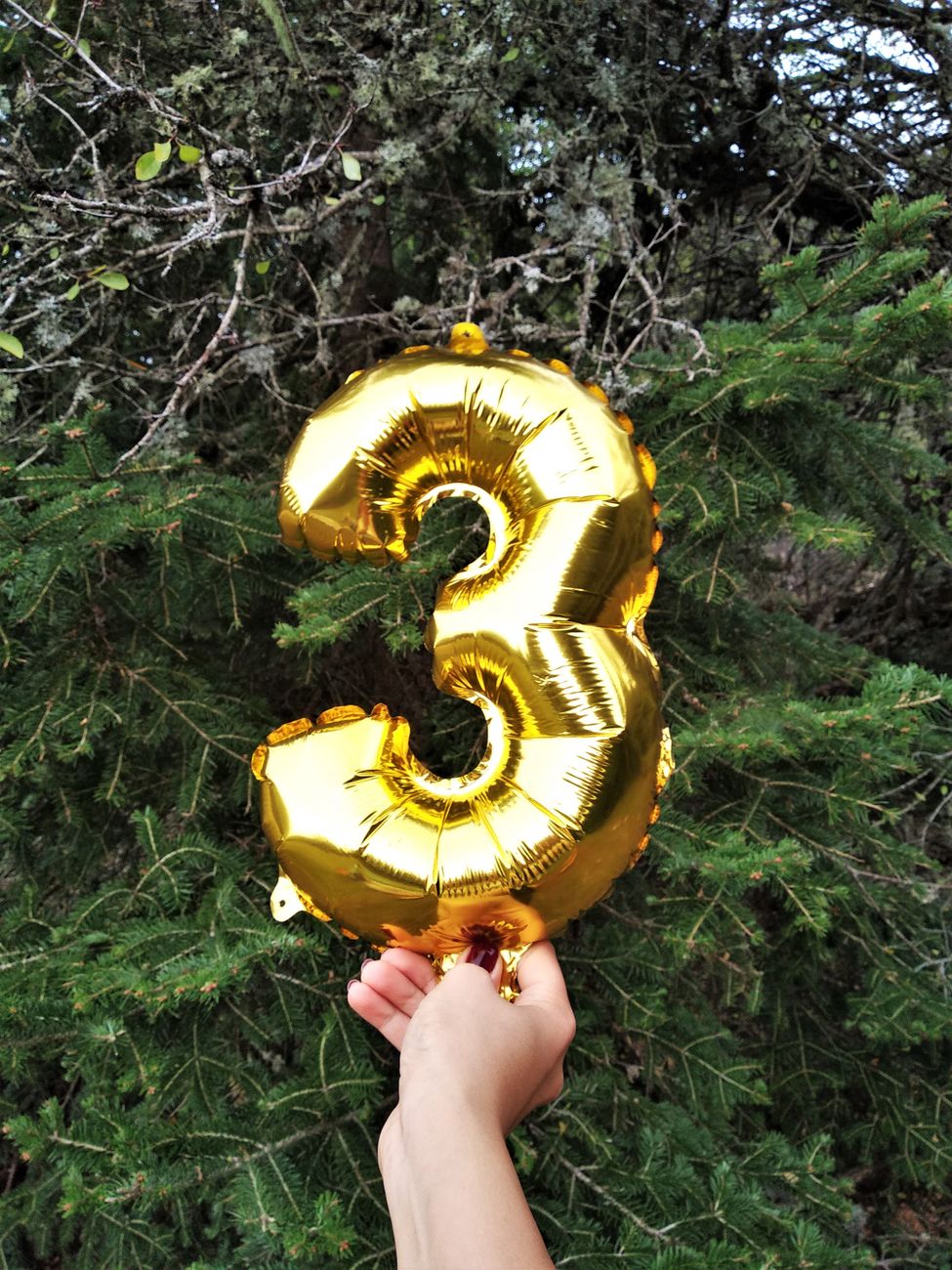
Plant Cuttings’ third birthday was the 7th October, 2026. That’s something to celebrate [which I do here], and also an opportunity to reflect on the site’s past 12 months.
Types of posts
It’s been 52 weeks since our last birth date, which means there were 52 posts, published at 5 pm (UK time) on a Friday. Predominantly, those were Cuttings or Book reviews. In terms of range, Cuttings brought you the important news that locusts are not fish, ancient Wood Age technology has been found in Greece, plants can light up your life, and something about structural colour in seaweed. [Ed. – but the biggest group of Cuttings were devoted to the year’s big project – see The year’s big project below]
Book reviews covered a broad range of botanical subjects – ferns, large brown seaweed, fungi, trees, and medicinal plants.
I don’t know if any of you have wondered how I get hold of books to review, but I thought a few words on that subject would be of interest. I eMail publishers and ask them if I can acquire a copy of the book to review in the blog. Not all agree to this, but most do – for which I am always very grateful – and my success rate is probably about 75%. Included in this year’s 25% – and which I won’t therefore be appraising – are Beronda Montgomery’s When Trees Testify: Science, Wisdom, History, and America’s Black Botanical Legacy, and The Legacy of Botanical Latin by Erin Petrella. Although both publishers were very happy to provide me with digital copies of the books, I’m old-fashioned enough only to want to work with actual, hold ‘em in your hands physical copies of books to make notes in. Plus, I’m at that advance age where having to read a book from a small computer screen is very tiring for my eyes. Pity, they both sounded like interesting books. Still, three book reviews are already scheduled for publication in our fourth year, and I’m hopeful of securing some more for you. Nevertheless, I send a big ‘thank you’ to all of the publishers who kindly supplied books for review on this blog!
Most popular post in the past year
Interestingly, the most viewed post was the one about Linnaeus and the invention of binomial nomenclature [Ed. – you probably know the post. It’s the one with an AI-generated image that seems to show how Hugh Grant might look if he were to star in a film version of the life and times of Sweden’s Linnaeus…]. As at 7th October 2026 it had over 1.1k ‘views’, which is nice to know. [ Ed. – however, even more curiously, that post was published on the 24th January, 2025 – which date is not within the past year. Whether that indicates some sort of timing glitch in the WordPress web site program that generates these things, I can’t say – but the ‘stats’ are good to have(!)]
The year’s big project
This was a big year – a very big year! – for me because I committed – in writing – to getting on with my book, whose goal is to tell the world 10 things that they really need to know about plants. That is a project that’s been in progress – in private – for the best part of 15 years. But, it’s now time to go public – in the sincere hope that getting it out in the open will give me the boost I need to finish it. Accordingly, 17 of the year’s Plant Cutting posts have been draft sections from the book project. Starting with an outline of the project on 1st May 2026. Where are we at with this?
Having looked at the draft chapters and supporting material I can see the overall shape of the book. I can also see places where there are gaps (some of which were pointed out in the various draft sections when they were posted). I’ve identified some of the material that needs to be written to fill those gaps, at least some of which will feature in follow-up posts, e.g. those dealing with ‘clever plants‘. But, there’s still a ways to go before we have anything like a complete draft. And I’ve not even thought much about how I’d like it to be published, and by which publisher. Nor have I yet sounded out an agent or whatever (not that i know how to go about finding one!). [Ed. – ideas and suggestions from those in the know about these matters will be very much appreciated!]
In summary, there’s still some way to go before the big idea is realised. But, future posts will continue to develop material for the book. If anything, this idea has meant that we aren’t short of ideas for future posts(!).
Guest writing…
Apart from nice comments about some of the blog’s post by readers, the big coup of the past year was an invitation to write an article for another publication. Inspired by reading draft chapter 5, The sensitive plant, an editor at East Anglia Bylines (“a not-for-profit regional online newspaper that supports citizen journalism. Our aim is to publish well-written, fact-based articles and opinion pieces on subjects that are of interest to people in the East Anglia and beyond” (quoted from here)) contacted me. They wondered if I’d like to write an article based on my blog post – but considerably shortened, and in a more journalistic style – for their readers. Writing in that way was quite a challenge, but I managed it and the article was published under the title “The plants are watching (listening, smelling, tasting, and feeling…)”. Presumably, that now makes me officially a published journalist(?)
[Ed. – I’m not sure how much that article has to do with East Anglia, but, since plants are to be found in that part of the world, it’s still geographically-appropriate. Anyway, it’s brought within the newspaper’s remit by – hopefully! – being of interest to people beyond East Anglia (if not actually to those within East Anglia…)]
Is the blog worthwhile?
On its official third birthday – 7th October 2026, there were 160 confirmed subscribers to the site. Thank you to each and every one of you!
Checking the subscriber list I’m surprised to notice many potential subscribers that have not confirmed their subscription – 42 when I last looked(!). As those of you who’ve successfully signed-up will know, subscribing to the blog is a 2-step process – you add your eMail on the site then have to respond to a welcome eMail sent by the site to your inbox. I’m guessing ‘not confirmed’ status means the intended subscriber hasn’t finished the process by responding to their welcome eMail.
What do readers suggest I do about those individuals? I have the eMail address they used to attempt subscription, would it be OK to eMail them directly to see if there is an issue with their attempted subscription? Sadly, I’ve only recently noticed that this information exist on my site, and some of the ‘non-confirmeds’ are many months old – that from an old school mate of mine is almost 2 years old(!!) [Ed. – yes, that is you ‘Andy the hieroglyph’ in Yorkshire…].
And that number of ‘non-confirmeds’ doesn’t include the dozen or so whose status is showing as ‘Bounced’ – where an incorrect email address has been supplied when they tried to subscribe (and which presumably means that I can’t eMail them to get it sorted!); or those described as ‘Paused’ – whose eMail settings are apparently not allowing WordPress message through – so they won’t get their weekly alerts re new posts to the blog.
All of which is rather sad. A, because these 50 or so potential subscribers won’t be alerted to the wonderful posts the blog publishes. And B, I don’t get the subscriber numbers (I’m always looking to increase my following; I can’t influence those who don’t want to be influenced(!)).
Even though subscriber numbers are quite low, I hope they find what I feel compelled to say each week is worthwhile. But, is the blog worthwhile from my point of view? It’s hard to say. Although it can be really hard work, I do enjoy the challenge of writing what I write – it keeps the little grey cells active. And I do occasionally get comments about posts from those who feel moved to contact me, and their appreciative words are always welcome. And, the grand mission – to try and increase the public’s botanical literacy – remains. On that basis I’ve just signed up for another two years of the site.
In terms of promoting the blog, each week I post an announcement of that week’s post on LinkedIn, Twitter, and Bluesky. The latter site usually generates some likes and reposts, which is useful in spreading the word. And LinkedIn tells me how much interaction there’s been with the post on that platform, which is useful information. Other than that, the most consistent promoter of the blog posts has been FeedSpot, which eMails those on its subscriber list giving a shout-out for my weekly post – and usually Plant Cuttings is right at the top of their list. [Ed. – sadly, mentions of Plant Cuttings posts in Botany One’s The week in botany seem to have all but disappeared during the year under review. In the past several months there’s only been one mention, that of the ‘colourful sex’ post published on 25th September 2026]
Well, that’s my summary of the past 12 months of Plant Cuttings. If all goes well there’ll be another one on its fourth birthday. Until then, I do hope you enjoy the posts, and do your bit to spread the word about the blog [Ed. – and yes, I’m sure Mr Cuttings will tell you more about progress on the book…]
Cheers, be well, and thank you!
Mr P Cuttings


Leave a Reply