Hidden World: The Survival Systems of Plants by Kevin Tarner & Rachel Hughes, 2025. The University of Georgia Press.
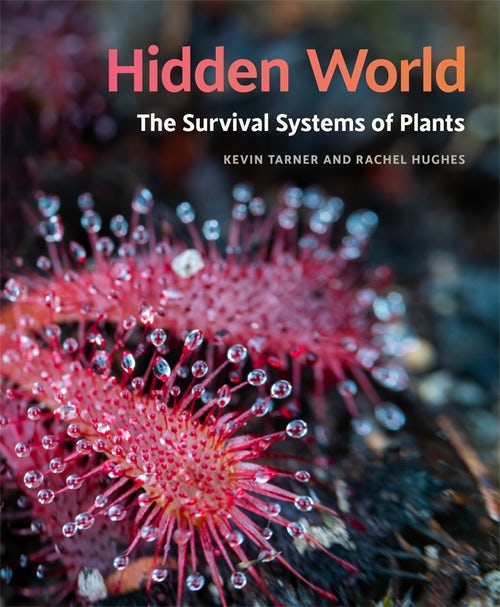
I recently reviewed The genius of trees by Harriet Rix. Appraising that book I was seriously conflicted about what to say about it because so much of what was good about it was overshadowed by its deficiencies. Reading Hidden world: The survival systems of plants by Kevin Tarner & Rachel Hughes [which book is here appraised] I have the same problem.
What Hidden world is about…
Although ostensibly about the ways plants defend themselves from the wide range of biotic and abiotic stresses they face, Hidden world by Tarner & Hughes also considers the myriad ways in which humans interact with – and have – co-opted/commandeered/appropriated those properties for themselves (e.g., “The latex in rubber, the wood fiber in paper, the botanical origins of explosives and movie film, chemical medicines such as morphine, and recreational products such as caffeine and nicotine all originated as plant defenses” (p. 2)). So much for an overview, what about putting some meat on those bare bones (Michael Carter)?
An idea of the book’s coverage…
The book deals with plant defences. But, what does that mean in practice? What aspects of defence does Hidden world cover? I couldn’t find a copy of the book’s table of contents on the publisher’s site, but hopefully the following chapter listing would be useful to potential readers/purchasers – and give some insight into the authors’ literary style.
Chapter 1 The Hidden World within Plants’ Lives and Our Lives: The Basics of Plant Survival [Essential scene-setting material here, including a very good introduction to photosynthesis, plant structure, transpiration, plus brief evolutionary history of plants, and aspects of physiology (e.g., tropisms)].
Chapter 2 How Enemies Attack Plants: Ecology and Plant Pathology [covering an impressive catalogue of agents that harm plants – e.g., bacteria, fungi, viruses, and water moulds (and oomycetes, which are distinguished from fungi), and animals that engage in piercing-sucking feeding, chewing, cutting, and scraping, leaf mining and boring, and galling].
Part One A Journey through Plants’ Physical Defense Mechanisms [the largest section of the book which looks at the many ways in which plants defend themselves against the attentions of other life-forms, such as herbivores and disease-causing microbes]: Chapter 3 The Surface of the Plant: A Deadly Obstacle Course; Chapter 4 Minefield: The Crazy Defenses inside Cells; Chapter 5 Heavy-Duty Construction: How Plants Grow Tough; Chapter 6 Plumbing Revolution: The Vascular System; Chapter 7 Plant-Speak: Botanical Signaling and Communication [although the common mycorrhizal network (CMN) is covered here, there’s no mention of the wood-wide web]; Chapter 8 The Enemy of My Enemy: Plant Protectors; Chapter 9 Hiding in Plain Sight: Camouflage and Mimicry; Chapter 10 True Colors: Defensive Plant Pigments; Chapter 11 Feel the Burn: The Hidden World of Botanical Flavors; Chapter 12 Energizing and Paralyzing: Caffeine; Chapter 13 Clean Enough to Kill: Soapy Saponins; and Chapter 14 Herbicide Rain and Superweed Reign: How Plant Defenses Create Herbicide Resistance.
Part Two Survival against Natural Forces [which examines how plants are adapted – or respond – to challenges in the environment, such as drought, storms, flooding, wildfires, and hostile soils]: Chapter 15 The Burning Question: How Do Plants Survive Wildfires?; Chapter 16 Every Drop Counts: Drought Survival; Chapter 17 Ice, Snow, and Plantifreeze: How Plants Survive the Cold; Chapter 18 Wind-gineering: The Hidden World of Storm Survival; Chapter 19 Sink or Swim: The Hidden World of Flood Survival; and Chapter 20 Life in the Barrens: How Plants Survive Inhospitable Soils.
Sections that support the numbered chapters
The book’s approx. 400 pages of main text is supported by three other sections:
Appendix of featured plants – listed alphabetically by family (which seems a slightly odd way to arrange this information), and then by genus within each family, we have approx. 17 pages of common English name, family common name, and species name (all of which are presumably mentioned in the text). Including fossils – such as Calamites – this listing covers a most impressive 135 families.
References – are arranged alphabetically by first author’s family name and grouped within chapters (but chapters 1 and 2 are combined) and provides what appears to be full citation information for sources used in the book. Up-to-dateness is probably assured by the fact that 137 of these items [which are mainly books and scientific articles] are dated post-2015. The list comprises almost 40 two-columned pages.
Index – at approx. three 3-columned pages, from ‘Aboveground ecology’ to ‘Yaupon’ (which provides the ‘black drink’ of Native Americans), it appears far too short to cover the tremendous range of topics covered in the book. For example, there were no entries for several items one would expect to have been included here (having read through the book), e.g., bacteria, disease, fungi, jasmonates, oomycete, phloem, photosynthesis (although C4 (shown as C4 here) and CAM photosynthesis do get entries), stomata, vascular tissues, virus, VOCs, xylem, etc. The index would greatly benefit from being expanded in future versions of the book.
Some comments about presentation of material
The above largely deals with what the book contains. What about its presentation? First, the good.
The words
Hidden world is very well written (with lots of lovely phrasing*) and should be comprehensible to its non-specialist reader audience. Peppered with humour, there is no doubting the authors’ enthusiasm for their subject and their eagerness to convey that to their readers. And what enthusiasm! [Ed. – as evidence for this, Hidden world contains 96 exclamation marks(!) Whilst that is not something you’d expect to see in a plant science book it is a mark of the style used by Tarner & Hughes]
Loads of images
In addition to the words, Hidden world is abundantly illustrated – mostly in colour – with over 250 images. However, although it includes plenty of micrographs – both from light and scanning electron microscopy – none of the figures have any indication of their magnification, e.g., with a scale bar. Since many of the features illustrated are effectively hidden because of their size, some indication of how big they are is important for the book’s non-specialist audience.
Although the images appear in the book roughly where you’d expect them to be – i.e., near to the relevant text – the great majority are not mentioned amongst the text. Except on three occasions where “as seen in the pampas grass photo” (p. 118) – with the scanning electron micrograph on opposite page 119). But, and more cryptically, we have: “Does photo 73 look familiar?” (p. 143), and “as seen in photo 84” (p. 180). What are photos 73 and 84? None of the figures have identifying numbers.
Lots of tables
The words and pictures are supported by 10 Tables, which helpfully provide many examples of named species illustrating various adaptations or characteristics, e.g., Table 10 Selected species with notable flood tolerance, Table 7 Chili varieties rated by their Scoville heat units (SHU), and Table 8 Plants Relying on Soap-Based Defenses. But, no source(s) are provided for the entries in those tables. In most cases, the tables are mentioned in the relevant text, but that doesn’t appear to have been done for Tables 6 A selection of plant mimics (I was a little surprised not to see mention of chameleon vine here…), and 9 A selection of wind-gineered plant species.
There is much here that is new
Although I’ve been reading about plants for decades – and teaching undergraduates about them for at least two – there is still a lot of material in Hidden world that was new to me. In that respect Tarner & Hughes’ book is a revelation – and provides a great basis for other’s lectures on the aspects of plant biology (and plant-people relationships…) covered by the book.
Without wishing to steal the author’s thunder (or spoil the reader’s enjoyment of the book), but in the interests of backing-up my claim, some of the new things were (although all of which need their sources to be stated – see Link statements to sources section below): “Spines are engineered to cause maximal damage and pain to herbivores” (p. 43); “Spines on desert plants … also operate like heatsinks to channel heat away from the plant’s stem” (p. 46); “The outer layer of the seed coat is called the cuticle” (p. 127); “On a verdant early spring day, an aphid crawls menacingly over a leaf. It taps the leaf as it goes, feeling and monitoring the resounding vibrations throughout the plant’s cells” (p. 148); “Temperature readings, taken by light receptors known as phytochromes” (p. 157); “Caladiums have evolved variegation patterns on their leaves that mimic the telltale squiggly lines left behind by leaf miner larvae as they tunnel and eat through foliage” (p. 202); “The average human adult loses between fifty and seventy billion cells per day as a result of apoptosis during normal growth and development” (p. 241) [this sounds like an awfully big number – I do want to see its source!]; the dried-up area of the Aral Sea is known as the Aralkum Desert (Caitlin Dempsey); a very good introduction to CODIT [Compartmentalization Of Decay In Trees (Alex Shigo & Harold Marx; Ross Tree)]; to discover how long sundew’s insect-trapping ‘slime’ can be stretched; and to learn that pieces of serpentinite [the metamorphic rock that contains serpentine minerals (Alex Strekeisen) and of special relevance to metallophytes] look surprisingly similar to chunks of blue Stilton cheese].
A prize-winning book
Hidden world was the joint-winner of the AHS Book Awards 2026 (as voted for by the American Horticultural Society). Amongst its prize-winning attributes were: “This original and academic publication on plant defenses and plant-human interactions impressed the award committee. Georgia Silvera Seamans praised the work’s sophistication, calling it a book for gardening people. Jim Long shared that while he learned a great deal by reading this book, he felt that it was accessible and addressed all experience levels. Brian Thompson also noted that the book is so enticing, it could captivate not only gardeners but all people who are interested in plants” (quoted from here).
Whilst this reviewer is happy to concur with those statements from the three named individuals, he has also assessed the book from the point of view of its scientific merits. In that respect there are some aspects of Hidden world that are not-so-good…
Making Hidden world better…
To some extent deficiencies in the book have been hinted at above. More explicitly, three areas undermine the otherwise very good work that Hidden world is trying to do.
Explain all technical terms
Technical terms are unavoidable in a book about plant biology – even a popular science one. Many are usually explained on first mention (e.g., ‘forisomes’, ‘domatia’, ‘cladoptosis, and subnivean zone), which is good to see. However, several aren’t, e.g.: macro- and micronutrients (and which issue isn’t really helped by “macro- and micronutrients such as potassium, nitrogen, and phosphorus” on p. 172, which wrongly implies that those named elements are micronutrients. Although on p. 114 Tarner & Hughes mention “macronutrients such as nitrogen, phosphorus, and potassium”); ‘programmed cell death’, ‘photoperiod’, ‘mesic’, ‘nurse plants’, and ‘forbs’. Addition of a glossary – and/or more explanations in-text – should help to alleviate this issue in future versions of this book.
Eliminate inaccurate phrasing…
Although Hidden world is a ‘popular science’ book, it is essential that the science is conveyed accurately. In trying to present quite technical topics in a manner that is more accessible to non-specialist or general readers Tarner & Hughes have made some economies of factual accuracy, either in language used or statements made. For example: “Plants respire in their own special way using their stomata and guard cells” (p. 61) [this seems to confuse ‘respiration’ for ‘breathing’. But, even with that word change, plants don’t really breathe through their stomata, but gaseous exchange does take place. Plants respire, like animals, using their mitochondria.]; “Extensive xylem fibers form throughout plants because these tubes [xylem vessel elements] connect end to end and develop openings at these connection points.” (p. 136) [xylem fibres are a very specific cell type in the xylem that are quite distinct from, and should not be confused with, xylem vessels in this way]; “Ginger’s rhizomes (roots) are factories for these chemicals” (p. 235) [rhizomes is not another name for roots. Although this is correctly stated on p. 342 where the authors tell us that some sand-binding grasses “also grow horizontally from underground stems called rhizomes”, it represents a contradiction in the text that needs to be resolved for the benefit of the readers]; and “a process called carbon fixation, wherein carbon is separated from carbon dioxide before being used to produce sugars and other carbohydrates” (p. 313) [carbon is not separated from CO2, the molecule is added as one molecule during the initial carbon-fixation stage of photosynthesis. The book’s erroneous statement in this regard also risks giving readers the impression that the oxygen released in photosynthesis comes from the carbon dioxide]. These sorts of things need to be corrected in a revised version of the book.
Link statements to sources
Although Hidden world provides hundreds of sources (in the extensive References section), in only one place was a source actually stated in-text, “For an exhaustive list of the world’s little sand armorers, see LoPresti and Karban (2016)” (p. 204) (and which is cited in full on p. 438). In a very few places specific sources are alluded to, e.g., “In 2006 plant scientists sifted through numerous medical case reports involving injuries from plant spines and thorns.” (p. 45), which appears to relate to “Halpern, M., Dina Raats, and Simcha Lev-Yadun. 2006. Plant biological warfare: thorns inject pathogenic bacteria into herbivores. Environmental Microbiology 9(3): 584–592” (p. 424), and, “The seeds finally came to light in 2007, when they were excavated and cultured into live adult plants by Russian scientists” (p. 123), which seems to relate to “Stakhov, V., Gulsum Asena Başlı, G. Gyulai, Z. Toth, A. Guner, Z. Szabo, Lilia Murenyetz, S. Yashina, L. Heszky, and S. Gubin. 2007. Pleistocene-age Silene stenophylla seeds excavated in Russia: a scanning electron microscopic analysis. Botany & Plant Biology, Chicago, Ill. http://2007.botanyconference.org/engine/search/index.php?func=detail&aid=2131” (p. 429).
Whilst sources are grouped by chapter in the References section – which narrows down the search for the appropriate source for a chapter’s statement – it still requires quite a lot of guesswork on the reader’s behalf to identify the source that Tanner & Hughes may have used to support statements they make within the book.
Although it is a big job to introduce the changes that make those explicit links, it is undoubtedly a kindness to the reader if evidence is explicitly stated for all factual statements made. Furthermore, doing so is also a mark of – and gives due credit to – the authors’ scholarship.
Aspirations…
The authors’ aspiration for the book are stated here: “We hope this work has illustrated the unusual and often unnoticed world of plants. Their continual struggle for survival is as fascinating as it is complex. Hidden World has attempted to highlight a few of the massive evolutionary milestones that have made plant defenses the formidable systems we see today. We hope this book has given you a better understanding of the complex, hidden network operating around you every day. Deep and astounding struggles in the natural world parallel and overlap our lives” (p. 401). It is this reviewer’s opinion Turner & Hughes have achieved that.
And it this reviewer’s aspiration that the deficiencies identified can be corrected and we can look forward to seeing the excellent version of the work that Hidden world thoroughly deserves to be.
Summary
There is much that is great about Hidden world: The survival systems of plants by Kevin Tarner & Rachel Hughes. It tells an important story about the myriad ways in which plants defend themselves, both from other organisms, e.g., insects, bacteria, and viruses, and environmental insults such as drought, storms, flooding, wildfires, and hostile soils. It also includes much information that is interesting from a human perspective [in which respect Hidden world is a useful addition to the plants-and-people genre]. However, in doing so it takes a few liberties with the accuracy and precision of the science it covers, and doesn’t make explicit the connections between factual statements in the text and the sources collected in the References section. But, those are matters easily dealt with in a revised version of the book, which this reviewer sincerely hopes is produced: Tarner & Hughes’ message is important and deserves to be presented in a way that delivers maximum benefit to its readers – and the kudos (Doug Dosberg) due to its authors.
* Examples of the book’s great phrasing include: “all plant defenses pack a specifically tailored wallop to something somewhere” (p. 3); “Parasitic plants have plant identification skills that rival the best botanists” (p. 36); “If you’ve ever encountered a cactus, you’re well aware of the antisocial behavior of nature’s botanical porcupines” (p. 41); “What you’re actually smelling in the wake of a rampaging lawnmower are the aromatic chemical screams of plants that have just been butchered” (p. 169); “plants have some pretty smart mimicry tricks up their “leaves” to confuse insects” (p. 201); and “Imagine a potato wrapped in a thick layer of bark, and you’re not too far from a lignotuber’s appearance” (p. 293).


Leave a Reply