Category: plant cutting
-

There’s a Japanese word for that…
The post discusses the connections between the Japanese language and botany. In particular, it highlights the relevance of origami and kirigami to modern-day engineering applications, and of shinrin-yoku to forest bathing’s health benefits. Additionally, it ponders the Japanese word for a wooden satellite.
-

A deep dive into seaweed structural colour
Investigating the tips of the red seaweed Asparagopsis taxiformis, Hiroshi Kawai & Taizo Motomura identified presence of ‘nanospheres’. The structural colours of blue or white produced by the nanospheres are interpreted as examples of ‘warning colouration’, and ‘camouflage’, respectively.
-
When is a tree not a tree? When it’s a rock(!)
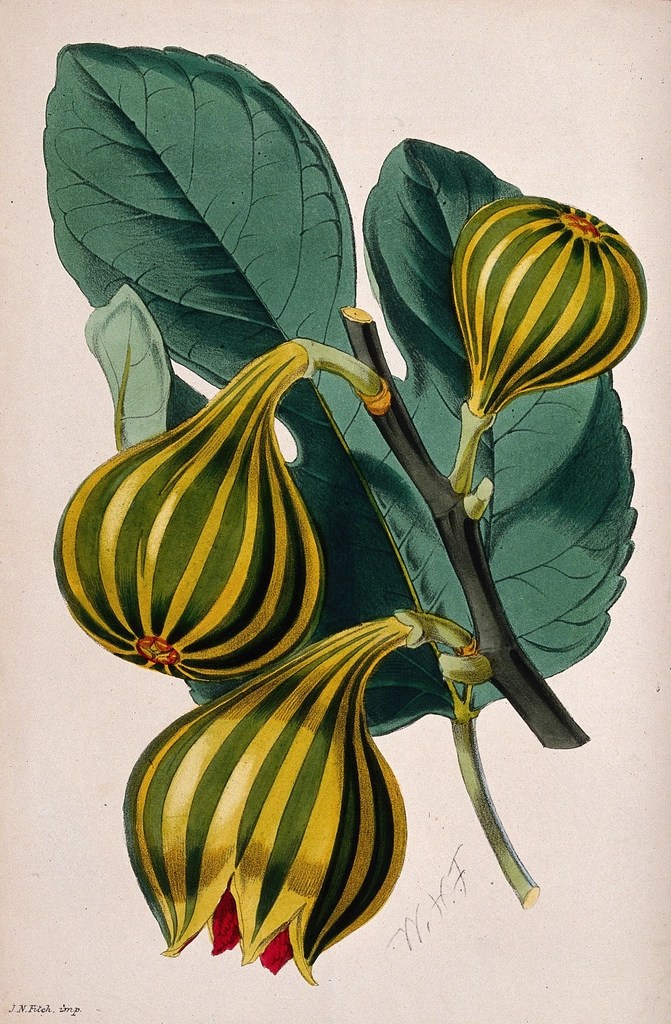
By way of an introduction to “ergastic substances” in plants, Mr P Cuttings considers calcium oxalate and carbonate. And relates this to a report that certain fig trees can sequester such inorganic carbon, potentially maintaining carbon sinks post-death. This biomineralisation could help to mitigate climate change while also benefiting soil…
-

Tomato or potato, which came first?
This post explores the evolutionary and historical relationship between potatoes and tomatoes, both members of the nightshade family. It briefly discusses their introduction to Europe via the Columbian Exchange, and notes contradictory claims about which arrived first. It then considers the pivotal role of tomato in the development of tubers…
-

What plant(s) should we study?
This post discusses Arabidopsis thaliana as a prominent model plant, highlighting its many advantages. However, although research on Arabidopsis has advanced understanding of plant biology, researchers are exploring additional model plants to address its limitations and better comprehend diverse plant species and their interactions.
-

Humanity and fungi, a civilising combination?*
Frans Hals’ painting “The Merry Drinker” leads to a consideration of how settled agriculture and alcohol may have influenced the rise of civilizations. Whilst research by Václav Hrnčíř et al. (2025) suggests that traditional alcoholic beverages correlate with political complexity, other factors such as agriculture and religion likely played larger…
-

What insects lack, fungi provide…
The relationship between the lac insect (Kerria lacca) and its symbiotic yeast-like organism (YLS) is crucial for laccaic acid production, a valuable red pigment. Research reveals YLS provides necessary amino acids for pigment synthesis, indicating a mutualistic bond, while the functions of the pigment itself remain unclear.
-

Detecting cyanobacterial blooms with NASA’s EMIT
NASA’s EMIT technology utilizes spectroscopy to analyze minerals in Earth’s deserts and has expanded its utility by detecting phycocyanin in wastewater from the Tijuana River. This insight reveals potential health risks linked to harmful algal blooms, significantly aiding coastal water quality monitoring while addressing environmental concerns from nutrient enrichment.
-

Getting to the bottom of 18th century embalming practice
This post explores the intriguing use of wood in an 18th-century Austrian corpse preservation method. The mummified remains of priest Franz Xaver Sidler von Rosenegg were notably preserved using wood chips (and other materials), revealing an unprecedented abdominal packing technique via the rectum, a unique aspect of historical embalming practices.
-

Recipe: wood + eggs + rice = ?
This post discusses the development of engineered transparent wood (ETW) using egg whites and rice (and wood!) as a sustainable alternative to traditional materials like glass. It highlights improved biodegradability and energy efficiency, along with potential applications such as insulation and electrical conductivity, showcasing wood’s versatility and value in modern…
 Plant Cuttings