Tag: science communication
-
![Predictable red tides? [From algae to rice plants… II]](https://plantcuttings.uk/wp-content/uploads/2025/04/pexels-photo-3992945.jpeg?w=963)
Predictable red tides? [From algae to rice plants… II]
This post discusses dinoflagellates and red tides. In particular it considers Karenia brevis and work by Shen Jean Lim et al., who have identified viruses in K. brevis harmful algal bloom (HABs). This discovery suggests potential viral control methods for mitigating such red tides and improving early warning of them.
-
![The phytoplanktonic paradox [From algae to rice plants… I]](https://plantcuttings.uk/wp-content/uploads/2025/03/image-2.png?w=1024)
The phytoplanktonic paradox [From algae to rice plants… I]
Research by Muratore et al. reveals that different phytoplankton species exploit phosphorus at varied times, suggesting ‘temporal niche partitioning’ as a potential solution to the phytoplankton paradox and underlining the intricate dynamics of marine ecosystems.
-

Shedding light on marine algae…
Dakota McCoy et al. (2024) demonstrate how heart cockles (Corculum cardissa) utilize specialized windows in their shells to focus sunlight onto symbiotic dinoflagellates for photosynthesis. The windows transmit 11–62% of photosynthetically-active radiation while filtering harmful UV rays, suggesting an adaptive advantage for both the molluscs and their symbionts.
-

Wildflowers unveiled: Science and secrets behind nature’s beauty
Chris Thorogood’s “Wildflowers” explores the diverse world of wildflower biology, covering topics such as ecology, evolution, and conservation. Suitable for an intelligent, teenager-plus aged audience, the book offers concise chapters with abundant illustrations. While informative, it provides limited sourced facts. Overall, it celebrates the planet’s rich diversity of wild plants.
-

When is a lichen not a lichen?
Chen et al. (2025) introduce a groundbreaking cyanobacterium-fungus symbiosis termed phyllosymbium, challenging traditional lichen concepts. In this unique association, the cyanobacterium envelops the fungus, displaying an unexpected structure. This discovery raises important questions about mutual benefits and interactions, broadening our understanding of symbiotic relationships in nature.
-

The roles of sharp structures in plant survival strategies
The post explores the defensive roles of thorns, spines, and prickles in plants. It discusses research showing that thorns can deter herbivores, their potential aposematic coloration, and the hypothesis that they may inject pathogens into herbivores, thus adding a biological warfare aspect to their defense mechanisms.
-

Moss and lichen: A deep dive into cryptogams
Elizabeth Lawson’s “Moss and Lichen” is a groundbreaking addition to Reaktion Books’ Botanical series, shifting focus from vascular to non-vascular plants and encompassing fungi. Integrating biology, ecology, and cultural relevance, the book explores the nature of mosses and lichens, their roles in ecosystems, and their significance to humanity.
-
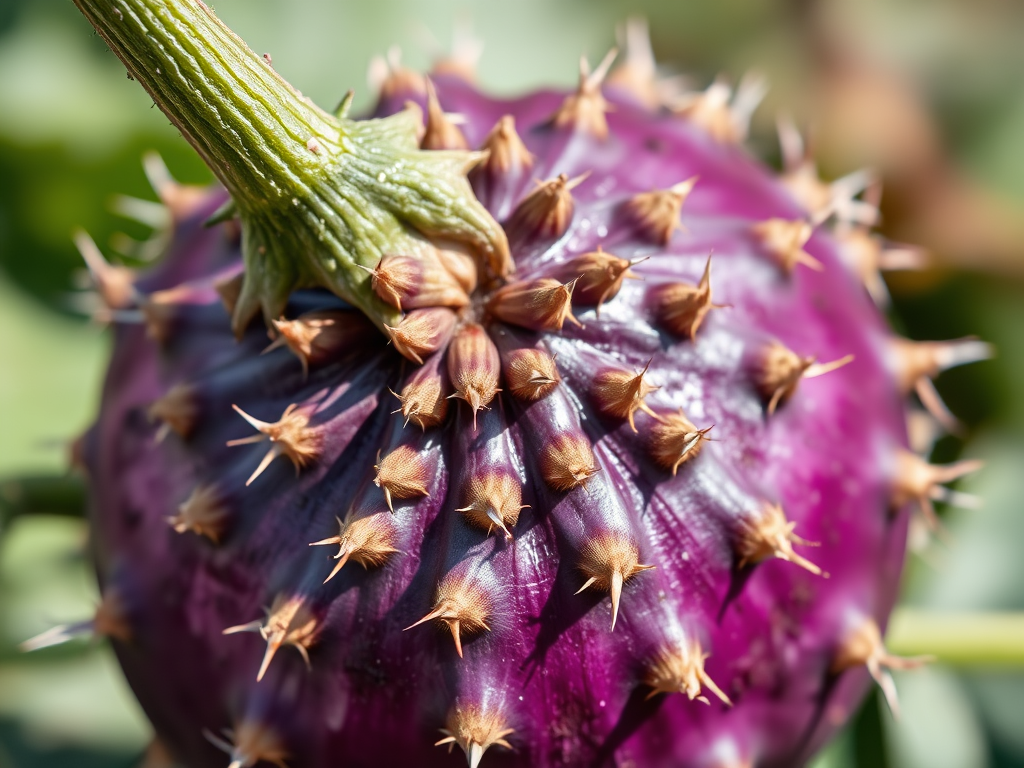
Gene-editing, taking the ouch out of touch
The post provides background on plant defenses against herbivores, focusing on prickles, thorns, and spines. It then looks in detail at work by Satterlee et al. who used CRISPR-Cas9 techniques to create prickle-free variants of aubergine and other Solanum species, potentially transforming agricultural practices and enhancing food safety during harvesting…
-

Plants, biting the hand that weeds them…
By way of preamble the post discusses the multiple uses of plant fibres, especially in relation to paper in books and newspapers, and longevity of the printed word. The post then discusses research into what types of paper cause paper cuts, and how the results led to creation of the…
-

The seed-spreading power of water
After providing some background on water’s unusual properties, this post considers some of the roles of water in plant biology. In particular, it looks at the work of Finn Box et al. on seed dispersal by the squirting cucumber.
 Plant Cuttings