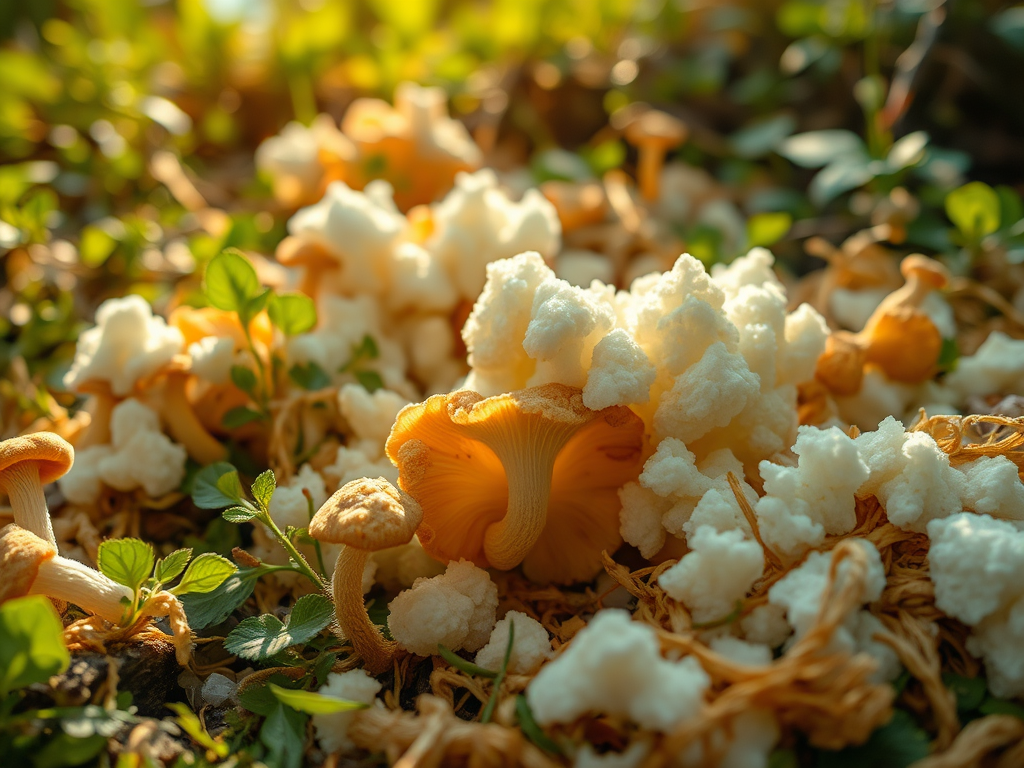
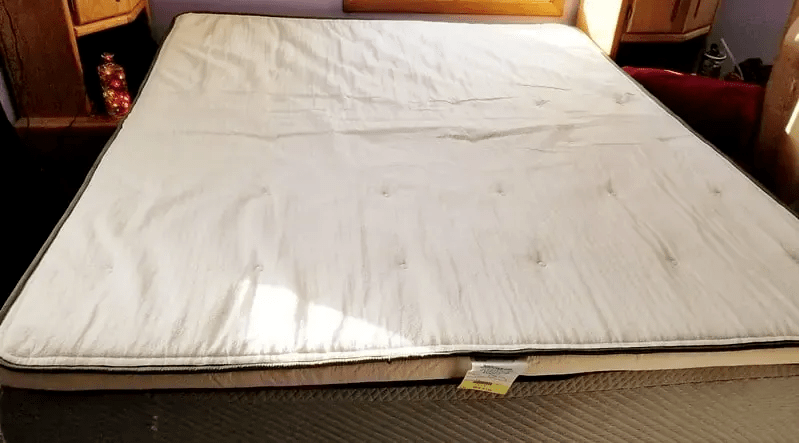
This image, entitled “A mattress topper atop a (apparently boxspring) mattress. The topper brand is “Avocado””, by The Sleep Judge is licensed under the Creative Commons Attribution 2.0 Generic license.
An arresting ‘statistic’ is that “More than 50,000 mattresses are discarded in the U.S. every day” [Ed. – which is even more startling when you do the maths and realise that’s in excess of 18,250,000 mattresses in a year…]. Although more than 75% of a mattress may be material that is recyclable*, far too many mattresses aren’t recycled, and end up in landfill sites. That adds to an environmental burden because the mattress can take up to 120 years to decompose (Andrew Paul**). Hopes are therefore understandably high that a biological intervention may help to reduce – quite literally – the problem of the ‘mattress mountain’. Some of those hopes may rest upon research by The Hong Phong Nguyen et al. (2026) in which a fungus converts – some of – the mattress’ material into insulation for use in buildings.
In that work, spores of Penicillium chrysogenum (Rachel Adams; Kara Rogers) were ‘fed’ shredded polyurethane foam harvested from old mattresses. As part of that process calcium carbonate deposits were produced, which became integrated into the foam. The new material that reults is a lightweight solid with remarkable heat resistant properties, withstanding exposure to temperatures nearing 1,832 degrees Fahrenheit (which is 1,000o Celsius). Such a heat-blocking ability is “very close to commercial insulation products already used in homes and buildings” (per Nguyen, quoted in Andrew Paul).
Whilst this innovation won’t recycle 100% of a mattress, it’s an encouraging intervention, and can make a difference if applied to the 18 million mattresses ‘thrown out’ in the USA during a single year [Ed. – I’m still sceptical of that number]. And, in the words of Nguyen et al. (2026), “These findings highlight the potential of fungal bioprocessing and biomineralization in producing high-performance, fire-resistant, and environmentally sustainable insulation materials for circular economy applications”.
As encouraging as this work is, for it to have any chance of making an impact on reducing what ends up in a hole in the ground, would-be mattress-discarders will need to be encouraged to bring their unwanted sleeping supports to the places where foam-feeding fungi can ‘repurpose’ the foam. And that will need to be easier than taking the mattress to the landfill site. Maybe a charge could be a levied on mattress purchase which can be reclaimed and refunded when it is taken to a fungal-recycling facility? In my experience you need to make recycling more attractive – and financial inducements can help – and easier than the alternative if you want to influence peoople’s behaviour. Just saying it’s better for the planet often isn’t enough.
For more on this story, see Andrew Paul, Mrigakshi Dixit, Sarah Houlton, Kate B, Margherita Bassi, here, and here.
* Arguments in favour of mattress-recycling include: “Less reliance on incinerators and landfills by diverting mattresses from the waste stream; Reduce the number of illegally dumped mattresses; Conservation of resources by using old steel, foam, wood and other material to create new products. This saves water, conserves energy and reduces greenhouse gas emissions; and Recycling creates jobs” (from the Mattress Recycling Council).
** Not related to mattress recycling, but if you want to read about the importance of getting the right mattress, do have a look at the article by Tony Ware. It’s mentioned in connection with Andrew Paul because Ware’s item – which looks and reads like an advertisment (especially promoted next to Stan Horaczek’s article entitled “75+ Presidents’ Day mattress deals that could finally fix your sleep” – is published in that highly-readable scicomm site Popular Science…
REFERENCE
The Hong Phong Nguyen et al., 2026. Upcycling end-of-life mattresses into sustainable insulation materials through development of mycelium based biocomposites. Sci Rep 16: 1604; https://doi.org/10.1038/s41598-025-30954-x


Leave a comment