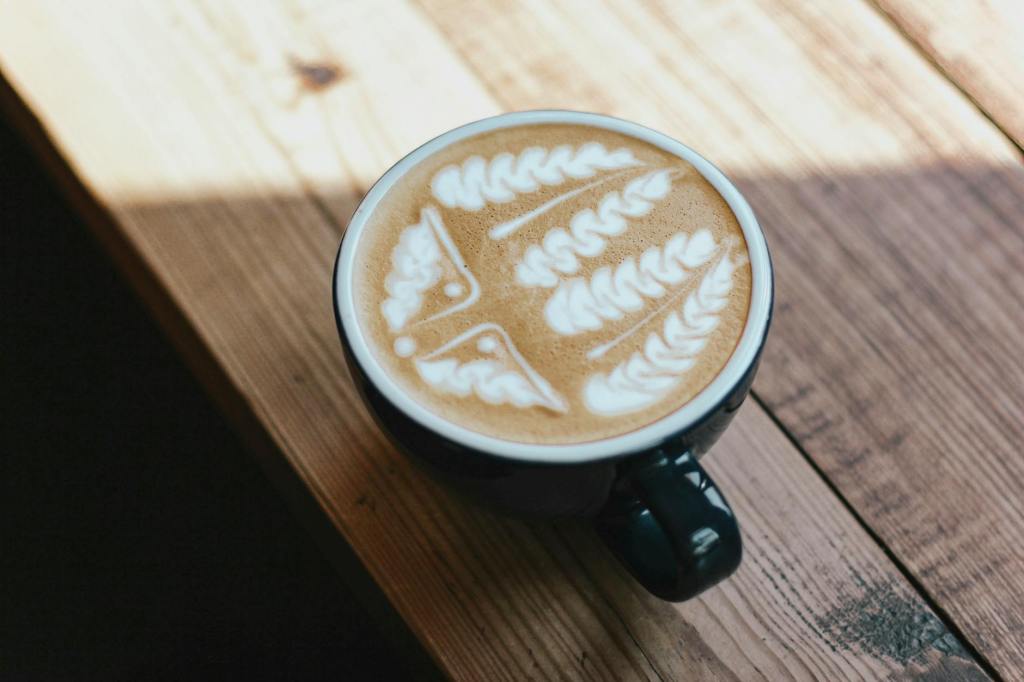
Picture this scenario, if you will. You walk into a coffee shop and see the price list* below.
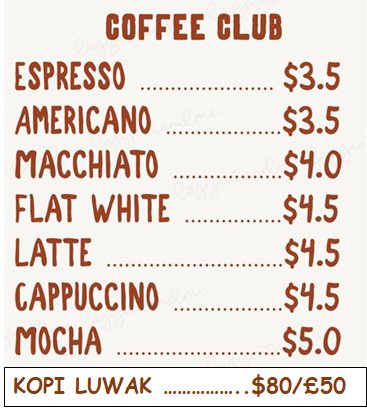
[This amended screenshot (Clémence Daniere) is originally from here]
Reading the list all seems well until you reach the last item, at which you may well stare in disbelief. What on Earth is kopi luwak? Although it’s presumably some sort of coffee, why is it so expensive? [Ed. – and do bear in mind that those are quite old kopi luwak prices, sourced from Rachael Bale ($), and Pete Clark (£)]
Kopi luwak is some sort of coffee** (Nathan Myhrvold). But, it’s unlike any of the other coffees on that list because it’s made from coffee beans that have been recovered from the faeces of the Asian palm civet (Paradoxurus hermaphroditus) [Ed. – for an infographic on this curious coffee extraction procedure, see here]. This ‘process’ “imparts a distinctive flavor profile to the beans, making kopi luwak one of the rarest and most highly sought after coffees in the world” (quoted from here).
Delving into the distinctiveness of civet poo coffee
Highly sought after it may well be, but its price is prohibitive for most of us. What if there was a way of reproducing that coffee in a way that retained its distinctive flavour, etc. without the expense involved in using civets and employing people to pick through its faeces?*** Maybe there is, and work by Ramit Mitra et al. (2025)**** gives some insight into that issue.
Essentially trying to answer: “what makes civet coffee so special?”, Mitra et al. (2025) examined chemical differences between ‘civet coffee’ and the ‘non-civet-gut-transited’ equivalent [Ed. – although the researchers termed the latter ‘manually-collected’, I’m not sure how well that term distinguishes the two sources since I’m guessing human digits may have been involved in removing the beans from the civet poop. Whoever spoke of the dignity of manual labour (Eric Smith), probably didn’t have this task in mind]. Although Mitra et al. (2025) mention several differences between scat-derived and manually-harvested berries, the only statistically significant differences they found were that overall total fat content of civet scat-derived coffee was higher, particularly in respect of methyl esters of caprylic acid and capric acid.
Understandably, Mitra et al. (2025) propose that “The significant difference in these two compounds between the sample types presumably contributes to the unique taste profile of civet coffee beans”. And add that “These two fatty acid compounds are instrumental as flavouring and aroma agents in food, often imparting a dairy or milk-like aroma and flavour” (Mitra et al., 2025). Furthermore, they suggest that such differences are probably due to the microbial fermentation process that the beans undergo within the civet [Ed. – a view previously advanced by Hikaru Watanabe et al., 2020, who, proposed that the bacterial genus Gluconobacter – which was “uniquely found in feces of the civet cat” – may contribute to the fermentation of coffee beans in the digestive tract of civets].
Limitations
Whilst that result may sound fair enough, it is important to realise that only unroasted beans were examined in the study. Indeed, “Roasted beans were excluded from the study to prevent the degradation of heat-sensitive compounds” (Mitra et al., 2025). But coffee, the drink, comes from beans that have been roasted, which high-temperature process may well contribute additional chemical modification to the compounds in coffee, which may affect the flavour and contribute to civet coffee’s distinctiveness (as the study’s authors do acknowledge). It is therefore – potentially – differences that persist after that final processing stage that are the most important ones.
So, as interesting as Mitra et al. (2025)’s work is, it doesn’t necessarily get us that much closer to pinpointing why civet poop coffee is so different from ‘normal’ coffee. Although comparison of ‘civet-gut-transited’ beans versus those harvested direct from coffee plants is an appropriate one to examine, the source of the coffee beans in both cases was Robusta coffee. Traditionally, kopi luwak is made from Arabica coffee (which Mitra et al., 2025 also acknowledge). Again, although the present study by Mitra et al. (2025) is of interest, it doesn’t tell us anything about the distinctiveness of Arabica-derived kopi luwak. Cue, more research.
Black ivory coffee [BIC]…
Having tried civet coffee, could your next taste experience be coffee from an elephant?*****, ****** I never knew this was ‘a thing’. But it is. So-called “Black Ivory Coffee is a luxury Thai brand that produces one of the world’s most expensive coffees using elephant dung” (for more on this product, see here, here, here, and Michael Sullivan – who must surely get a prize for his article entitled “No. 1 Most Expensive Coffee Comes From Elephant’s No. 2”). As for civet coffee the beans are liberated from the dung before cleaning-up, roasting and creating a coffee drink. And, also as for civet coffee, BIC has a unique flavour (but which is presumably different from civet coffee’s…). Work by Nodoka Chiba et al. (2025) has attempted to discover what makes BIC, which they tell us has a “smooth, chocolaty flavor … of low bitterness”, unique*******.
As inferred for civet coffee, Chiba et al. (2025), the differences between elephant dung beans and those straight from the bush (Arabica coffee in this study********), appear to be down to the fermentation that they undergo during digestive transit within the animal’s gut. In particular, the amount of pectin within the beans is reduced, which results in “lower levels of bitter compounds like 2-furfurylfuran after roasting” (Gaby Clark).
In the case of civet coffee and BIC, their uniqueness appears to be a result of ‘co-operation’ between the mammal that ingest the beans and microbial activity during their journey through the animals gut, probably from Acinetobacter in the case of BIC (Chiba et al., 2025). [Ed. – for a useful infographic (Midori Nediger) of this work, see Fig. 4 in their freely-accessible scientific article by Chiba et al. (2025)]
So, when ‘in funds’, and you can treat yourself to either civet coffee or black ivory coffee (or both), don’t forget to thank those gut-resident bacteria – as you remind yourself that it’s (probably, sometimes) the little things that make the biggest difference (Jeanette Lewis, Mona Martinez)…
* For those of you trying to navigate the confusing plethora of coffee drinks available today, this infographic (sourced from here) should help:

Joking aside, if you’re interested in the meaning behind the names – or just curious to know where the names came from, find our more here, and here. And, for more on the history of coffee generally, see Nathan Myhrvold, here, here, and here. Plus, for an interesting insight into how coffee-drinking has been viewed throughout history, see Anne Ewbank.
** More accurately, kopi luwak is “not actually a type of coffee, but rather a method of production” (quoted from here) [Ed. – and the coffee ‘beans’ harvested from the animal’s poop aren’t actually beans, they are known as ‘cherries’ (Steffen Sauer). The coffee bean is the seed, found within the cherry (Steffen Sauer)…]
*** Apart from the issue of cost, another – and arguably, more compelling – reason for trying to reproduce the taste to replace the civet-sourced version is concern over the welfare of animals kept for the purpose of producing kopi luwak. Stories abound (see here, here, here) about the conditions in which some of the civets are housed so that they can be fed the appropriate coffee diet, and their scat deposited in a place where the coffee beans can be reliably and predictably harvested (rather than finding them by chance amongst civet dung piles scattered throughout the natural range of the animal). [Ed. – and this is before we consider concerns about civets and COVID transmission to humans (Jes Hooper, 2022)]
**** For more on the kopi luwak research, see Manupriya, CP Sajit, Sahana Sitaraman, Kasturi Das, Carolyn Gramling, Palatty Allesh Sinu (one of the team behind the work), James Woodford, here, here, here, here, here, and here.
***** Apparently, black ivory coffee should not be called ‘elephant coffee’ because elephant coffee is the name given to coffee made from large [as an elephant is a large animal] Arabica beans [https://twochimpscoffee.com/guides/what-is-a-coffee-cherry/].
****** It should be noted that neither kopi luwak nor BIC are the only animal-processed coffees. There’s also: monkey coffee, “a rare and expensive coffee made from beans partially chewed and spit out by primates, like Formosan rock macaques in Taiwan and rhesus monkeys in India”; bat guano coffee, “often called bat spit coffee or bat poop coffee, is a rare luxury coffee made from coffee beans licked and partially digested by the Jamaican fruit bat (Artibeus jamaicensis [sic])”; jacu bird coffee “produced from the droppings of the Jacu bird (Penelope obscura [sic]), a pheasant-like bird native to Brazil’s Atlantic rainforest”; and misha or coati coffee, “a rare, luxury Peruvian coffee made from Arabica beans fermented through digestion by coatis (Nasua nasua [sic]), raccoon-like animals native to the Andes”. And there may well be others out there for your delectation and caffeinated delight. For a little more on the subject of ‘digested coffees’, see the review by Ashika Raveendran & Pushpa S Murthy (2022).
Given the involvement of animals in production of those coffees, one wonders how suitable the beverages may be for vegans or vegetarians. Alternatively, even if not explicitly stated, can you be sure your vegan coffee has not been through the digestive tract of a civet, bat, coati or elephant..? [Ed. – I suspect the price will give you a good indication…]
******* For more on the BIC research, see Gaby Clark, Michelle Starr, Elizabeth Taylor, Sheetal Kumari, Tudor Torita, here, here, and here.
******** And the specific source of the beans makes quite a difference to the coffee that’s produced. For example, “In terms of the tastes of … elephant coffee, Sahra [Nguyen Coffee Supply founder Sahra Nguyen] said that elephants eating a diet of only grass and robusta coffee cherries produce a finished product that brews a cup with coconut and pandan [Ed. – which is, presumably, a reference to the fragrant-leaved plant Pandanus amaryllifolius, known as ‘pandan’ in Malay… ] notes, that has a nutty hint of sweetness and a bold, whole coffee cherry aroma. She also mentioned that the coffee from elephants that only eat grass and arabica coffee beans was sweeter, but not as distinct” (quoted from here)…
REFERENCES
Nodoka Chiba et al., 2025. Preliminary study of gut microbiome influence on Black Ivory Coffee fermentation in Asian elephants. Sci Rep 15: 40548; https://doi.org/10.1038/s41598-025-24196-0
Jes Hooper, 2022. Contamination: The case of civets, companionship, COVID, and SARS. Journal of Applied Animal Welfare Science 25(2): 167-179; doi: 10.1080/10888705.2022.2028627
Ramit Mitra et al., 2025. Civet Robusta and natural Robusta coffee are different on key fatty acid methyl esters and total fat. Sci Rep 15: 36281; https://doi.org/10.1038/s41598-025-21545-x
Ashika Raveendran & Pushpa S Murthy, 2022. New trends in specialty coffees – “the digested coffees”. Critical Reviews in Food Science and Nutrition 62(17): 4622–4628; https://doi.org/10.1080/10408398.2021.1877111
Hikaru Watanabe et al., 2020. Gluconobacter dominates the gut microbiome of the Asian palm civet Paradoxurus hermaphroditus that produces kopi luwak. PeerJ 8: e9579; doi: 10.7717/peerj.9579


Leave a comment