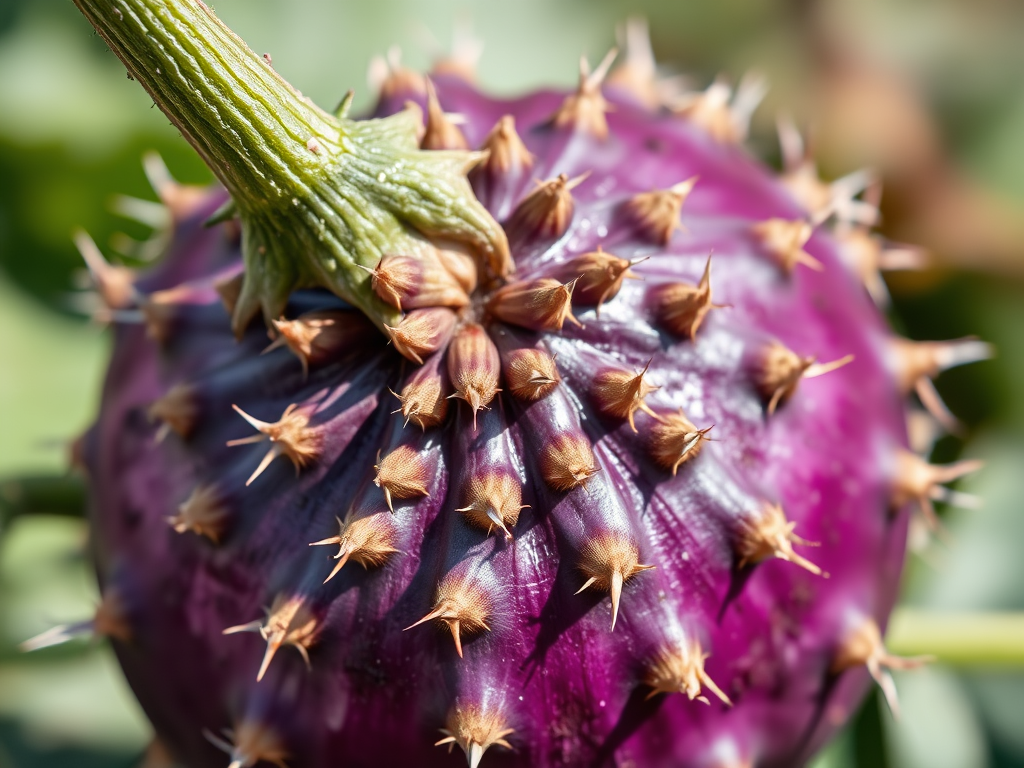

This image, entitled “Rose Prickles”, by JJ Harrison is used under the Creative Commons Attribution-Share Alike 3.0 Unported license.
One of the major differences between plants and animals is that the green things are generally rooted to a particular location and are non-mobile. Whilst – famously – there are some representative of the plant world that aren’t immobile – e.g. tumbleweed (Emily Osterloff) – most are fixed to one spot. That – plus the evolutionarily-annoying quality that plants have for being an easy meal for animals means that they’ve had to defend themselves from the unwanted attention of all forms of herbivores – browsers, nibblers, grazers, munchers, miners, etc. But, although they can’t run away when faced with such existential danger, plants are not merely sitting ducks, defencelessly waiting to be eaten as Simcha Lev-Yadun (2016) importantly reminds us. Over the long course of evolution, plants have developed many ways to defend themselves (e.g., Laura Hlusko, here, here, here, and here).
Prickles versus thorns versus spines
A major physical defence plants possess to deter herbivores is a range of sharp-pointed projections from their aerial surfaces. Amongst that awesome arsenal of armaments are prickles, thorns, and spines. Although these three words are often used as if they were synonyms for each other, each term has a specific meaning in a botanical context. In the interests of improving the public’s botanical literacy, those technical differences are described as follows…
Prickles, are outgrowths of the epidermis or bark (Sarah Gage, Peter v. Sengbusch). Although they may consist of several layers of cells they are devoid of veins, i.e. they do not contain vascular tissue, phloem and xylem (Carrie Brown). That lack of vasculature is one of the reasons why they “tend to pop off easily, as they do on rose bushes” (Sean Lahmeyer). But, and despite the ease with which prickles can be brushed aside, we are best advised to “Think of them as razor-sharp freckles” (Richard Pallardy)*, whose positioning on the plant “appears to be truly random”.
Thorns are derived from stem tissue (Sean Lahmeyer). Defined as ‘modified shoots’ (Carrie Brown), they are “a stiff, woody, modified stem with a sharp point” (Sarah Gage). Like stems they may be simple or branched, and contain vascular tissue. One way to think of them is as “pointy branches or stems” (Richard Pallardy*).
Spines, in contrast to thorns, are derived from leaves (Sean Lahmeyer), or parts of leaves (Carrie Brown). Like thorns, spines contain vascular tissue. However, despite their leafy origin, spines are dead at maturity, and no longer capable of photosynthesis (Sean Lahmeyer). A spine is “a firm, slender, sharp-pointed structure” (Sarah Gage). Although many plants have spines, “they are perhaps most memorably marshalled by the cacti, who sport them in abundance” (Richard Pallardy*).
Which is neatly summarised by Emma Caton as: “Prickles are epidermal outgrowths, which means they are a growth from the skin of the plant. Spines are firm and slender structures that are modified leaves or stipules, appendages found at the base of a leaf’s stalk. True thorns are modified branches, plants like citrus have spiky parts sticking out of the ends of the branches, these are thorns.”
Nevertheless, although the features defined by those terms are structurally different they are united in their ability to pierce the bodies of animals that come into contact with these spiny projections. Plants armed with prickles, thorns, or spines, are jointly considered to be ‘spinescent’ (Sean Lahmeyer).
Whilst those features have some success at deterring animals from feeding on their owner, they are also a deterrence to the human animal who might like to feed on the green feast as well. Whilst that is primarily a minor irritation for the limited snacking of individuals upon such armed botanics, it can become a major inconvenience if the plant is grown and harvested on a more commercial basis when the human labourers may suffer serious injury if exposed to the plants’ armament for long periods or repeatedly. In such cases, it is desirable to develop ‘unarmed’ – or disarmed – versions of the plants that can be farmed in a way that’s less dangerous for those employed in the business of harvesting, processing, packing, and transporting the crop to the customers, and by those who are intent on consuming the botanical bounty.
Focus on prickles and crops…
Over many generations, selective breeding – using traditional techniques (Clemens van de Wiel et al., 2010; AM Shahiba et al., 2023) [Ed. – but note that so-called ‘traditional crop-breeding’ “isn’t nearly as traditional as you think” (Brad Plumer)] that can take a long time to bear fruit, and may be very labour-intensive – has led to the creation of some non- – or much-less- – prickly versions of otherwise well-armed crop plants – e.g. domesticated aubergines (Solanum melongena) compared with their wild relatives (Emma Caton; Anna Page et al., 2019; K Kris Hirst), and the development of ‘thornless’ blackberries (MA Coyner et al., 2005).
Dawn of the prickle-free aubergine
However, apart from the time it takes, such traditional attempts at crop improvement are often unpredictable in terms of their outcome, and frequently involve changes to other crop characteristics than just the desired transformation (Ania Wieczorek & Mark Wright, 2012). Nowadays, when a modification is identified as desirable, we might – understandably – expect that to be delivered as quickly as possible. Recognising that reduction in prickliness is achievable, it seems highly likely that presence/absence of prickles has a genetic basis. With our modern-day arsenal of molecular-genetical techniques, might it be possible to speed up the process, and create non-armoured versions of crop plants more directly, and more quickly? The answer, it seems, is: Probably. And work reported by James Satterlee et al. (2024) gets us a step closer to that goal**.
Investigating the molecular mechanism of prickle development in aubergine (Solanum melongena), Satterlee et al. (2024) found that loss of prickles was associated with a mutation (Laurence Loewe, 2008) in a gene involved in biosynthesis of the plant hormone cytokinin. Appropriately named PRICKLELESS (or PL), after its alteration with CRISPR-Cas9 genome editing (Ian Haydon, McKenzie Prillaman, Jay Sullivan), Satterlee et al. (2024) it was confirmed that it controlled prickle formation. PL is a member of a so-called gene family called LONELY GUY (LOG) that’s involved in cytokinin biosynthesis.
Armed with this insight, and looking at prickle-bearing plants beyond the Solanum genus, the team found that LOG mutations were associated with loss of prickles in other flowering plants, such as Chinese date (Ziziphus jujuba), and the ornamental rose (Satterlee et al., 2024).
Having established something of a precedent for the association of disruption of the appropriate LOG family gene with loss of prickles in flowering plants with this discovery, could it be used to achieve specific modification of prickle-bearing plants in a direct way that is much quicker than conventional plant breeding? This was attempted with Solanum prinophyllum (forest nightshade, a wild species), Solanum cleistogamum (‘desert raisin’, a forage crop), and Solanum aethiopicum (‘scarlet eggplant’, a cultivated crop). In all cases, prickle formation was suppressed when the relevant gene was altered. Which is a pretty dramatic proof-of-concept.
Furthermore, and another bonus compared to traditional plant breeding approaches, the only effect observed was the loss of prickles, no other detectable changes were found in the gene-disrupted plants. In other words, using the rather technical language of molecular genetics, no pleiotropy was found***. Which suggests that this form of genetic intervention does deliver a predictable and specific change to the appearance of the plant in a more predictable manner than is likely to be achieved by ‘conventional’ crop breeding.
But! One can only wonder if solving the problem of presence of prickles may have created another one. Why do the plants have prickles in the first place? Presumably, they act as a defence against would-be herbivores. If the plants are deprickled, have their plantivore defences now been lowered so they will suffer attack and damage by the hungry hordes of herbivores? This will need to be considered in any analysis of costs-and-benefits associated with the production of prickle-free plants. Assuming it is satisfactorily resolved, can we now look forward to …
A prickle-free future?
As Satterlee et al. (2024) conclude, “these results pave the way to the predictable removal of prickles in food and ornamental crop species, such as the rose, using genome editing”. With the widespread use of the LOG gene family in prickle formation across many different flowering plant species – an example of convergent evolution (Holly Chetan-Welsh & Lisa Hendry) [which notion is widely discussed in the paper by Satterlee et al. (2024)] – there would seem to be considerable scope in producing prickle-free versions of angiosperms.
However, one group of plants where removal of prickles might seem to be most profitably directed is those in the Solanum genus. As the eponymous genus for the nightshade or potato flowering plant family (Melissa Petruzzello), the Solanaceae, this includes such well-established, commercially-valuable species as potato (Solanum tuberosum), tomato (Solanum lycopersicum), and aubergine (or eggplant) (Solanum melongena). Having already, and successfully, shown that this gene-editing approach can work in producing prickle-free plants in several Solanum species – aubergine, scarlet eggplant, ‘desert raisin’, and forest nightshade – maybe Satterlee et al. (2024)’s next target should be Solanum sisymbriifolium?
S. sisymbriifolium, found in south America where it is known locally as ‘vila-vila’ – and ‘litchi tomato’ in the USA – (Ashley Adamant), has “tasty red fruits, and people want to develop it into a harvestable commercial crop” says Sandra Knapp (Merit Researcher at the Natural History Museum (UK), specialist on the taxonomy of the nightshade family, Solanaceae, and a co-author of the Satterlee et al. (2024) paper) (quoted by Emma Caton). However, a major hurdle to commercial exploitation is that “it’s super prickly to the extent that even cows won’t eat it! … But by altering the genes, plant breeders could remove the prickles … which could develop it into an alternative fruit crop for local communities”, says Sandra Knapp (quoted by Emma Caton).
With a number of desirable nutritional (Moehninsi et al., 2015; Farhana Momen et al., 2021; Diptesh Biswas et al., 2023) and health (Diptesh Biswas et al., 2023) properties (or potential (DA Ibarrola et al., 2022)), is a – prickle-free – version of – the traditional crop vila-vila poised to follow another south American food plant and become the ‘next quinoa’ (Jillian Kubala & Kris Gunnars, Melissa Petruzzello, Megan Ware)? [Ed. – vila-vila has its own social media presence (Lena Sernoff) on Facebook, which is a good start in influencing public opinion in favour of this food plant.]
Whilst we must await any exploitation of ‘new’ species, a more tangible benefit may be further removal of prickles from cultivated aubergines. As reported by Dr Sandra Knapp, “Eggplants are usually transported with the calyx still attached, and so the prickles can cause damage by piercing the flesh of the fruit that is next to it, so having a prickle-less eggplant is important. If you can get rid of the prickles on the calyx, you can probably pack more eggplants into a box, and they wouldn’t get damaged in transit” (quoted by Emma Caton). Reduction in crop damage – and potential spoilage – and transportation costs is in addition to lessening damage to the hands and arms of the individuals involved in handling those still-too-prickly fruits.
And finally, …
… Although this post has had much to say about the scientific paper by James Satterlee et al. (2024), it’s not the only investigation to report success of gene editing to remove prickles in a Solanum species. Working with aubergine, Lei Zhang et al. (2024) identified a gene named SmLOG1, which codes for a … cytokinin biosynthetic enzyme within the LONELY GUY (LOG) gene family, and which is mainly active in immature prickles. Knocking-out the gene using CRIPSR-Cas9 gene-editing “abolished prickles across all tissues, confirming its critical role in prickle morphogenesis” (Lei Zhang et al. (2024).
Although here named SmOG1, its action sounds very similar to that of the PRICKLELESS gene identified by Saterlee et al. (2024). Although the two papers are different in many respects, in essence they both report the same discovery – of a gene for a cytokinin biosynthesis enzyme whose editing abolishes prickle formation in aubergine. I don’t know what the chances may be of two independent research groups making the same discovery, but clearly it has happened [Ed. – so it must be 100%? Who knew probability was so straightforward…].
And for those who are interested in such things [Ed. – and which is probably most of us…], Lei Zhang et al. (2024)’s paper was accepted by its journal on the 27th April 2024, whereas Satterlee et al’s wasn’t accepted until 6th June 2024. But, and this is all-important, Lei Zhang et al‘s manuscript was received by Horticulture Research on 28th March 2024; the manuscript from Satterlee et al. was received at the offices of Science on … 21st February 2024. Lei Zhang et al‘s prickle-free plants were pipped at the post by Satterlee et al.
Although matters of ‘priority’ in science (Hannah Rubin & Mike Schneider, 2021; Leonid Tiokhin et al., 2021) and being the first to demonstrate or discover something are of interest, the real outcome of these two pieces of work – and which is more in line with the true spirit of science being more about co-operation rather than competition – is that the two papers essentially corroborate each other’s findings. Which is always a pleasing result.
* If you want to read some refreshingly ‘unstuffy’, but still informative and educational, writing about matters botanical, I’d encourage you to look at the entirety of Richard Pallardy’s Encyclopedia Britannica article entitled “Botanical Barbarity: 9 Plant Defense Mechanisms”. For more on – and from – this writer see here, here, here, here, here, and here.
** For more on this prickle-eliminating story, see James Satterlee, here, here, here, here, here, here, here, Mary Williams, Emma Caton, here, Corinne Simonti, Elizabeth Kellogg (2024), Henry Ertl (2024), and Yuri Figueiredo et al. (2025).
*** which is quite a remarkable outcome because, as a plant hormone (Shane Palmer), cytokinin is involved in many aspects of plant growth and development and co-ordinating appropriate response of the plant to environmental challenges (Asami Osugi & Hitoshi Sakakibara, 2015), e.g., cell division, vascular and cambium development, leaf senescence, biotic stress, drought and salt tolerance, and nutrient uptake (Cristiana Argueso & Joseph Kieber, 2024). In light of that, one would not predict that the only outcome of altering a gene involved in cytokinin biosynthesis would be “cell type–specific functions, such as promoting outgrowths from the fruit and stem epidermis” (Elizabeth Kellogg, 2024). That fact that that is what we appear to have here argues for a very high degree of specificity of LOG control of prickle formation (Elizabeth Kellogg, 2024).
REFERENCES
Cristiana T Argueso & Joseph J Kieber, 2024. Cytokinin: From autoclaved DNA to two-component signaling. The Plant Cell 36(5): 1429–1450; https://doi.org/10.1093/plcell/koad327
Diptesh Biswas et al., 2023. Solanum sisymbriifolium Lam.: an underutilised plant with future prospects in nutrition and medicine. Proc. Indian Natl. Sci. Acad. 89: 445–469; https://doi.org/10.1007/s43538-023-00191-9
MA Coyner et al., 2005. Thornlessness in Blackberries: A Review. Small Fruits Review 4(2): 83–106; https://doi.org/10.1300/J301v04n02_09
Henry Ertl, 2024. Convergent evolution of prickles across crops. Nat Rev Genet 25: 676; https://doi.org/10.1038/s41576-024-00771-5
Yuri G Figueiredo et al., 2025. The genetic basis of prickle loss in the Solanaceae. Trends in Plant Science 30(2): 119-121; https://doi.org/10.1016/j.tplants.2024.09.016
DA Ibarrola et al., 2022. The antihypertensive and diuretic effect of crude root extract and saponins from Solanum sisymbriifolium Lam., in L-NAME-induced hypertension in rats. Journal of Ethnopharmacology 298: 115605, https://doi.org/10.1016/j.jep.2022.115605
Elizabeth A. Kellogg, 2024. Plant prickles are controlled by genes involved in the final step of cytokinin biosynthesis. Science 385(6708): 495-496; doi: 10.1126/science.adr2473
Simcha Lev-Yadun, 2016. Plants are not sitting ducks waiting for herbivores to eat them. Plant Signaling & Behavior 11(5): e1179419; doi: 10.1080/15592324.2016.1179419
Laurence Loewe, 2008. Genetic mutation. Nature Education 1(1): 113.
Moehninsi et al., 2015. Phytonutrient content of Solanum sisymbriifolium Lam. Berries. Journal of Food Composition and Analysis 44: 73-79; https://doi.org/10.1016/j.jfca.2015.07.004
Farhana Momen et al., 2021. Evaluation of Nutrient Composition of Ripe and Unripe Fruits of Solanum sisymbriifolium. Asian Journal of Food and Agricultural Sciences 9(1): 12-19; doi: https://doi.org/10.24203/ajafs.v9i1.6525
Asami Osugi & Hitoshi Sakakibara, 2015. Q&A: How do plants respond to cytokinins and what is their importance? BMC Biol 13: 102; https://doi.org/10.1186/s12915-015-0214-5
Anna ML Page et al., 2019. Domestication of Eggplants: A Phenotypic and Genomic Insight, pp. 193-212. In: M Chapman (ed.) The Eggplant Genome. Compendium of Plant Genomes. Springer, Cham; https://doi.org/10.1007/978-3-319-99208-2_12
Hannah Rubin & Mike D Schneider, 2021. Priority and privilege in scientific discovery. Studies in History and Philosophy of Science Part A, 89: 202-211; https://doi.org/10.1016/j.shpsa.2021.08.005
James W Satterlee et al., 2024. Convergent evolution of plant prickles by repeated gene co-option over deep time. Science 385(6708): eado1663; doi: 10.1126/science.ado1663
AM Shahiba et al., 2023. Traditional Plant Breeding Techniques – Exploring Crossbreeding and Selection Methods. Zenodo; https://doi.org/10.5281/zenodo.8406082
Leonid Tiokhin et al., 2021. Competition for priority harms the reliability of science, but reforms can help. Nat Hum Behav 5: 857–867; https://doi.org/10.1038/s41562-020-01040-1
Ania Wieczorek & Mark Wright, 2012. History of Agricultural Biotechnology: How Crop Development has Evolved. Nature Education Knowledge 3(10): 9.
Lei Zhang et al., 2024. PE (Prickly Eggplant) encoding a cytokinin-activating enzyme responsible for the formation of prickles in eggplant. Horticulture Research 11(7): uhae134; https://doi.org/10.1093/hr/uhae134


 Plant Cuttings
Leave a comment