Back in the day, as a member of the Editorial Board of the Annals of Botany, I used to handle manuscripts about carnivorous plants. I’m not sure why such papers started to come my way, but I enjoyed the challenge of dealing with them, and developed a fondness for the subject. Having been ‘rotated off’ of the board 18 months or so ago, I miss those manuscripts. Well, more specifically I miss the subject matter. So, by way of a bit of a trip down memory lane for me, but – and much more importantly – as a service to my readers, I present here a round-up of news from the weird and wonderful world of carnivorous plants in 2023 (and provide some essential background)…
Carnivorous plants background
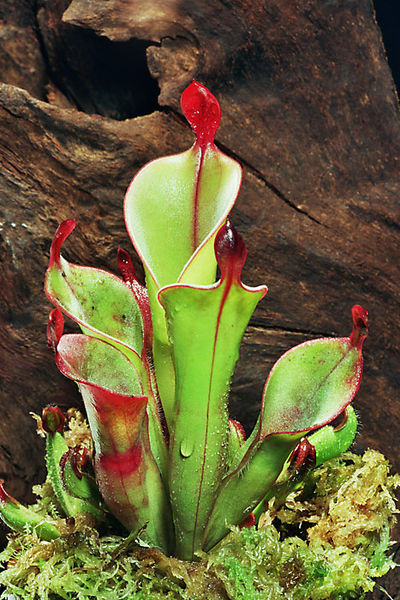
This image of Heliamphora chimantensis by Andreas Eils is from Wikimedia Commons, a freely licensed media file repository.
Although I suspect most readers of this item will know something about carnivorous plants, for the sake of completeness it’s useful to give a little background to the subject. And what better way than to echo the words of the good – and very knowledgeable – folk of the International Carnivorous Plants Society: “Carnivorous plants are predatory flowering plants that kill animals in order to derive nutrition from their bodies. They share three attributes that operate together and separate them from other plants. Carnivorous plants: Capture and kill prey; Have a mechanism to facilitate digestion of the prey; Derive a significant benefit from nutrients assimilated from the prey”. Should you desire more on the topic, may I suggest you look here, here, here, here, and here?
For good measure, there’s also lots of carnivorous plants miscellanea in Kerry Lotzof’s article, Stephanie Pain’s extensive account; Tom Hale’s intriguingly-entitled item “Could A Carnivorous Plant Eat A Human?”, Carly Cassella’s article, and on Barry Rice’s The Carnivorous Plant FAQ. For a more nuanced look at pitcher plants specifically, why not try here, and, for a broader consideration of plant carnivory, I recommend Mark Chase et al. (Botanical Journal of the Linnean Society 161: 329–356, 2009; https://doi.org/10.1111/j.1095-8339.2009.01014.x). Finally, a reminder of one of the best books about carnivorous plants for the inquisitive lay reader, Dan Torre’s Carnivorous plants. If of interest, here’s my appraisal of this great little book’s hardback version.
A fungus to aid digestion…
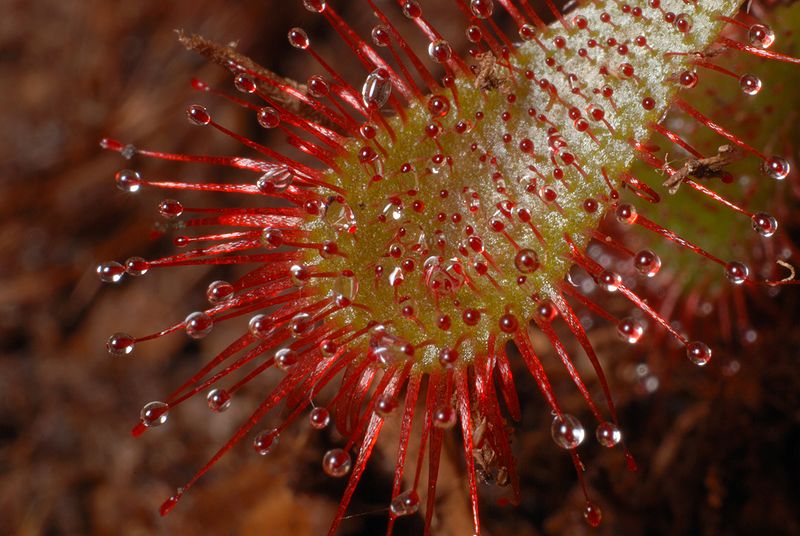
Image of tip of leaf of Drosera spatulata by Michal Rubeš is licensed under the Creative Commons Attribution 3.0 Czech Republic license.
We may be familiar with the notion of ‘good’ bacteria in assisting digestion in humans (Nikolas Jakob). But, what about fungi? Can they help in a similar way? I don’t know about the situation with people, but, as a site dedicated to botanical education, I do have a story about fungi and digestion in plants…
Although it’s probably more satisfying to provide a Plant Cutting about research that’s actually been published in a journal after having been subjected to appropriate peer-review, etc., some group’s results are just as newsworthy if they’ve not – yet – been subject to the scrutiny of their peers. Take for instance the tale embodied within this title “An acidophilic fungus is integral to prey digestion in a carnivorous plant” by Pei-Feng Sun et al. (bioRxiv 2023.11.07.566145; doi: https://doi.org/10.1101/2023.11.07.566145), posted on bioRχiv, “the preprint server for biology”. The unrefereed preprint concerns an investigation of the micro-organisms associated with the carnivorous spoon-leaved sundew plant (Drosera spatulata), and their role in prey-digestion by the plant. In particular Sun et al. examined the bacteria and fungi within the mucilage secreted by the leaves of the sundew.
Comparing communities of mucilage-dwelling microbes with those in the environment surrounding the sundew, they identified a fungus, Acrodontium crateriforme as the dominant species within the mucilage. Furthermore, they demonstrated that the fungus not only colonises, but also reproduces upon, the sundew – as you might expect from a long-established companion of the plant. Further studies showed that more prey protein was digested by the sundew in the presence of the fungus that in its absence, suggesting that A. crateriforme enhances the digestion process. But, is this solely an example of the fungus helping the plant in an ‘altruistic’ way? Probably not, because…
Interestingly, growth of the fungus in culture (Juliana Hauser) – rather than on sundew leaves – is enhanced with the addition of powdered ants (Polyrhachis dives) to the medium. This suggests that the fungus can utilise insects as a growth supplement, and therefore benefit from any of this material that is not taken up and used by the sundew. The fact that the fungal ‘partner’ may also benefit from the insect-trapping activity of the sundew strongly suggests that this work has identified an interesting example of an unsuspected mutually beneficial symbiosis (Emily Osterloff). As the authors recognise, this raises a number of questions about how the fungus-sundew relationship first established, and the nature and extent of this sort of microbial-co-operation in other carnivorous plants. All good material for follow-up work.
When mathematicians model meat-munchers…

This image of a drowned lizard found in a freshly opened pitcher of Nepenthes rajah by Rbrtjong is from Wikimedia Commons, a freely licensed media file repository.
Botanists are a clever bunch of people and they can achieve a great deal in terms of dissecting and understanding the minutiae of plant life. However, their important and insightful investigations can often be improved when other disciplines are co-opted to help with the work. This is graphically demonstrated by the mathematicobotanical collaboration of Derek Moulton et al. (Proceedings of the National Academy of Sciences 2023; 120 (38) doi: 10.1073/pnas.2306268120). The Oxford University-based team studies the pitchers of members of the genus Nepenthes, flask-shaped structures at the end of the plant’s leaves. Famously, the fluid-containing pitchers trap a wide range of prey* and the products of their digestion contribute to the nutrition of the plant (Matthias Freund et al., Plant Physiology 190: 44–59, 2022; https://doi.org/10.1093/plphys/kiac232).
Although the mechanism of prey-trapping is the same for all pitcher plants**, the team were intrigued by the variety of shapes of the rim [technically known as the peristome (Ulrike Bauer & Walter Federle, Plant Signaling & Behavior 4: 1019-1023, 2009; https://doi.org/10.4161/psb.4.11.9664; Cordelia Sealy; Ashwini Patil et al.) in nature that ranges from a simple cylinder, to highly ornate, fluted or toothed structures [https://www.maths.ox.ac.uk/node/64967]. Recognising that, the more lavish the rim, the greater the cost of its production, Moulton et al. wondered why the plants didn’t just produce the same simple structure. Might the variety of rim types be related to different prey caught by the different species? That was the basis of the hypothesis that they examined and which investigated whether the shape, size and geometry of carnivorous plant pitchers affected the type of prey that they trap.
Whilst you might expect to investigate this hypothesis by going into nature to study the different pitcher types, the team opted for a desk-based, mathematical modelling approach. Using this technique they produced reconstructions of pitchers which enabled them to explore the trade-offs that exist in these plants between costs of pitcher production and benefits to the plant. An advantage of such modelling is that it’s not limited to the variation that exists in nature, but can be used to investigate both realistic peristomes [which do exist in the wild] and extreme versions — that either don’t exist, or have not so far be found, in nature. Using this approach, Moulton et al. showed that variations in peristome geometries had a profound effect on what prey was caught. For example, the geometry of highly flared peristomes appeared to be particularly suited to capturing walking insects such as ants. The overall conclusion from the study is concisely summed up in the scientific paper’s significance statement: “Our analysis suggests that a diversity of peristomes in Nepenthes evolved in response to variation in prey capture”. Evidently, when it comes to Nepenthes pitchers, one ‘size’ does not fit all (Candace Osmond).
But, you may ask [and not unreasonably], why not study the living plants themselves? in the wild? Because, as Chris Thorogood – one of the research team – reminds us, “many of these plants grow in remote, inhospitable places, so studying them in nature can be challenging”. Consequently, mathematical modelling can be a powerful – and less hazardous! – way to investigate this particular peristome production problem. Nevertheless, the modelling predictions will still require corroboration from studies on the living plants – in due course. In other words, we’ll still need intrepid botanists to go to where the plants grow.
Turning carnivory on … and off
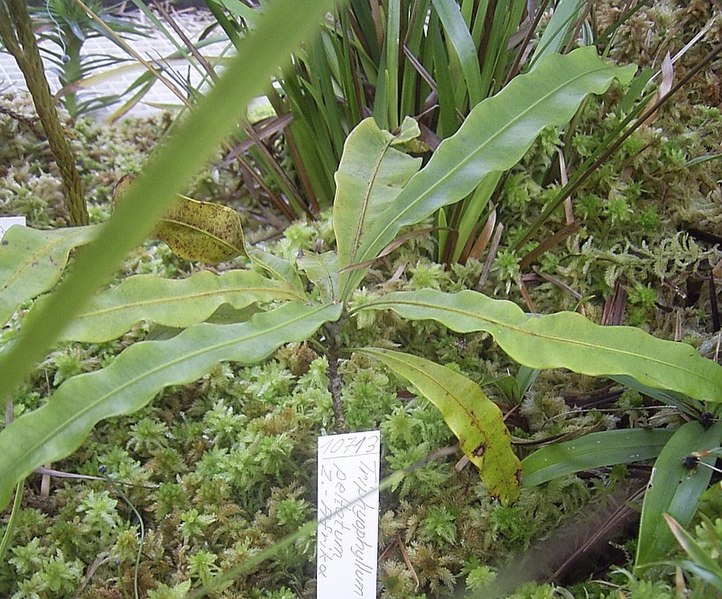
This image of Triphyophyllum peltatum by Denis Barthel is from Wikimedia Commons, a freely licensed media file repository.
When we speak of a plant as being carnivorous it’s easy to assume that such a characterisation applies throughout the entire life cycle of the organism so-categorised. That that’s not necessarily so is underlined by the work of Traud Winkelmann et al. (New Phytologist 239: 1140-1152, 2023; https://doi.org/10.1111/nph.18960) on Triphyophyllum peltatum. The studied plant is a liana, native to tropical regions of West Africa, and has a number of claims to fame. For example, it has attracted significant interest from medical and pharmaceutical sectors because its constituents exhibit promising activities against pancreatic cancer and leukaemia cells. [For more on the biomedical potential of carnivorous plants more generally, see Magdalena Wójciak et al., 2023. Molecules 28, no. 5: 2155. https://doi.org/10.3390/molecules28052155; Magdalena Wójciak et al., 2023. Molecules 28, no. 8: 3639. https://doi.org/10.3390/molecules28083639.%5D
However, and as fascinating as that it is, the plant’s notability for this Cutting relates to its capacity for facultative carnivory. The plant is not carnivorous all of the time, i.e. it has the faculty to be carnivorous, but that is exercised only under specific conditions. The study by Traud Winkelmann et al. was directed at identifying the conditions under which its carnivorous leaves form. Longish story short, “We exposed the plant to different stress factors, including deficiencies of various nutrients, and studied how it responded to each. Only in one case were we able to observe the formation of traps: in the case of a lack of phosphorus (P),” said Traud Winkelmann. NB, this revelation is not to be interpreted as the alteration of the form and function of leaves that already exist when the nutrient regime to become carnivorous – or not, as appropriate. But, that leaves that are newly formed under the changed nitrogen environment develop as either carnivorous ones – or not depending on which way the nutrient levels have been changed.
Winkelmannn et al‘s work from 2023 brings to mind the study by Aaron Ellison & Nicholas Gotelli (PNAS 99(7): 4409-4412, 2002; https://doi.org/10.1073/pnas.022057199) on the northern pitcher plant, Sarracenia purpurea. The plant produces pitchers – leaves specialized for prey capture and nutrient uptake, and phyllodia – leaves that are more efficient at photosynthesis. Manipulation of the plant’s growing conditions demonstrated that increased nitrogen (N), but not phosphorus, reduced production of pitchers relative to phyllodia. The conclusion being that the plants diverts resources into development of photosynthetic leaves at the expense of pitchers when there is enough N in the environment so that an insect diet is not necessary. Here, the pitcher plant has the faculty to become less-carnivory-dependent when in the presence of adequate supplies of N***.
Maybe somewhat obliquely, both pieces of research show how functioning of plants is markedly affected by sufficiency of N and/or P – two of the essential macronutrients for plants that are often considered to be present in growth-limiting amounts in the environment (Jennifer Morgan & Erin Connolly (2013) Nature Education Knowledge 4(8):2). Both studies also demonstrate the remarkable dexterity of plants in terms of developmental plasticity (Maaike de Jong & Ottoline Leyser of their growth and behaviour. Plants are remarkably in tune with their environment.
In conclusion
Clearly, there’s a lot going on in the carnivorous plant community – and those items were just from 2023****. With all of this going on, one can only wonder what 2024 will bring [apart from publication of the fungus-sundew study by Pei-Feng Sun et al. (2023)]…
* It has frequently been proposed that the pitchers can trap and digest large mammals such as rats (Stuart Fox; Tom Hennigan). However, although, on at least on one occasion, it’s been suggested that a human baby might be accommodated within the death-dealing depths of some pitchers, that notion seems to have been discounted (Tom Hale)…
** And concisely described thus: “The mechanism by which pitcher plants capture prey is well known: each pitcher has a slippery rim at the top, called a peristome, covered in ridges that collect a film of water. This causes the prey to skid and fall into a pool of digestive juices at the bottom of the pitcher, similar to a car aquaplaning on water”.
*** And, as the authors state, their study provides empirical support for the cost–benefit model of botanical carnivory. For more on this notion, see Marcos Méndez & P Staffan Karlsson (Oikos 86: 105-112, 1999); Andrej Pavlovič & Michaela Saganová (Ann. Bot. 115(7): 1075-1092, 2015; doi: 10.1093/aob/mcv050); Thomas Givnish et al.
**** And space did not permit mention of the several studies in that year on the mechanism of snap-trap action in Venus flytrap (Dionaea muscipula). Studies such as: Rainer Hedrich & Ines Kreuzer (New Phytologist 239: 2108-2112, 2023; https://doi.org/10.1111/nph.19113) and their attempt at “Demystifying the Venus flytrap action potential”; and Carl Procko et al. (Current Biology 33: 3257–3264, 2023; https://doi.org/10.1016/j.cub.2023.06.048) who used CRISPR-Cas9 gene-editing (Wen Gan Cong & Anna PK Ling, BioTechnologia 103(1): 81-93, 2022; doi:10.5114/bta.2022.113919) to study the involvement of the genes known as Flycatcher 1 and Flycatcher 2 and the role of ion channels in the trap’s closure. Neither are we able to share news of the Venus flytrap mutant that is unable to count (Anda-Larisa Iosip et al., Current Biology 33: 589-596.e5, 2023; https://doi.org/10.1016/j.cub.2022.12.058), and was accordingly named Dyscalculia.
 Plant Cuttings
Leave a comment